Safety Tip #1

NEVER LEAVE
COOKING UNATTENDED

Cooking is the leading cause of home fires. Always stay in the kitchen while frying, grilling, or broiling. If you must leave, turn off the stove even for just a minute.

Keep a lid nearby to smother small pan fires instantly.
Safety Tip #2

AVOID
OVERLOADING OUTLETS

Plugging too many devices into one outlet overheats wiring and sparks fires inside your walls. Use one high-wattage appliance per outlet and never daisy-chain extension cords.

Replace any cord that feels warm or shows fraying immediately.
Safety Tip #3

REMEMBER
THE PASS METHOD

Pull the pin, Aim at the base of the fire, Squeeze the handle, and Sweep side to side. Knowing PASS can stop a small fire before it destroys your entire home.

Keep an extinguisher in your kitchen and check its pressure gauge monthly.
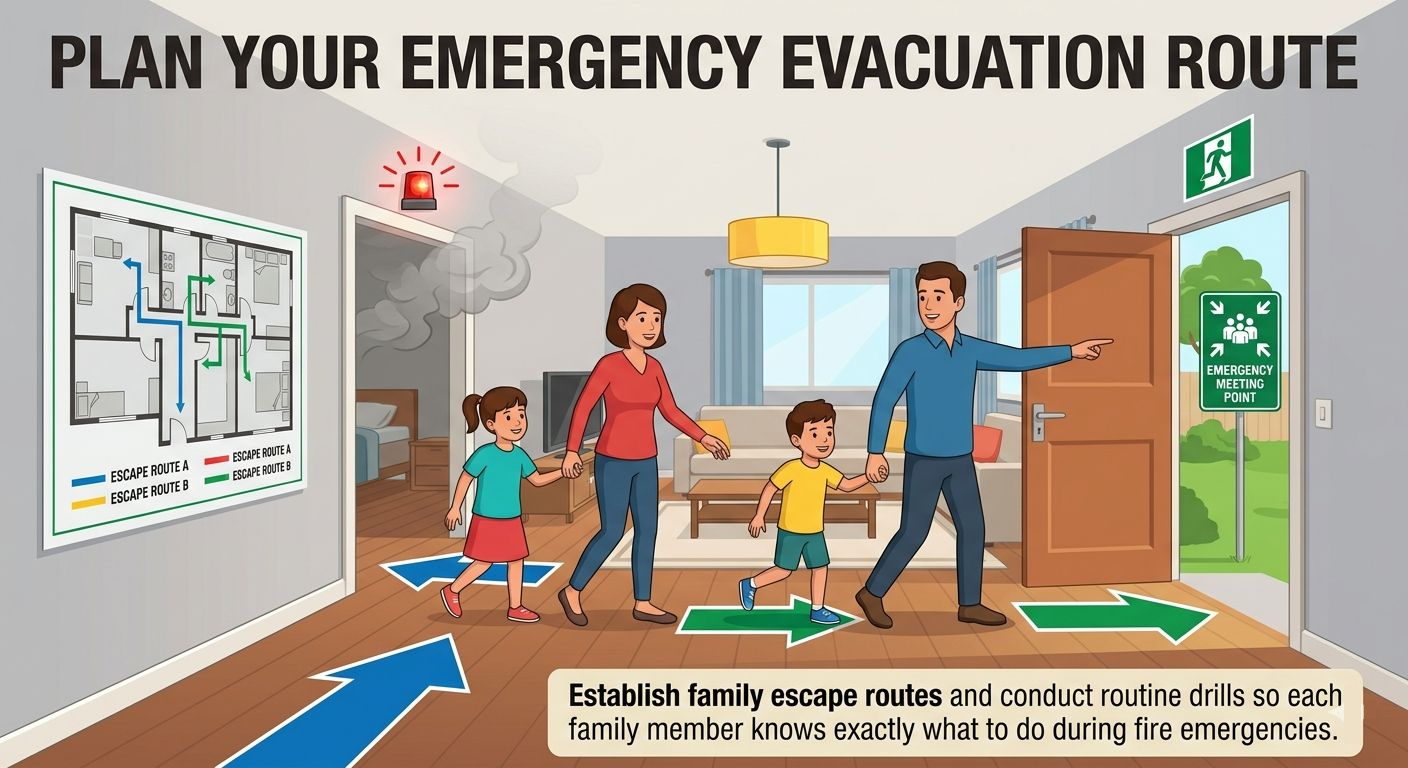
Safety Tip #4

PRACTICE YOUR
ESCAPE PLAN

In a real fire, panic sets in fast. Rehearse your escape plan with everyone in your household at least twice a year so that every person knows exactly where to go without thinking.

Agree on one outdoor meeting point so everyone is accounted for immediately.
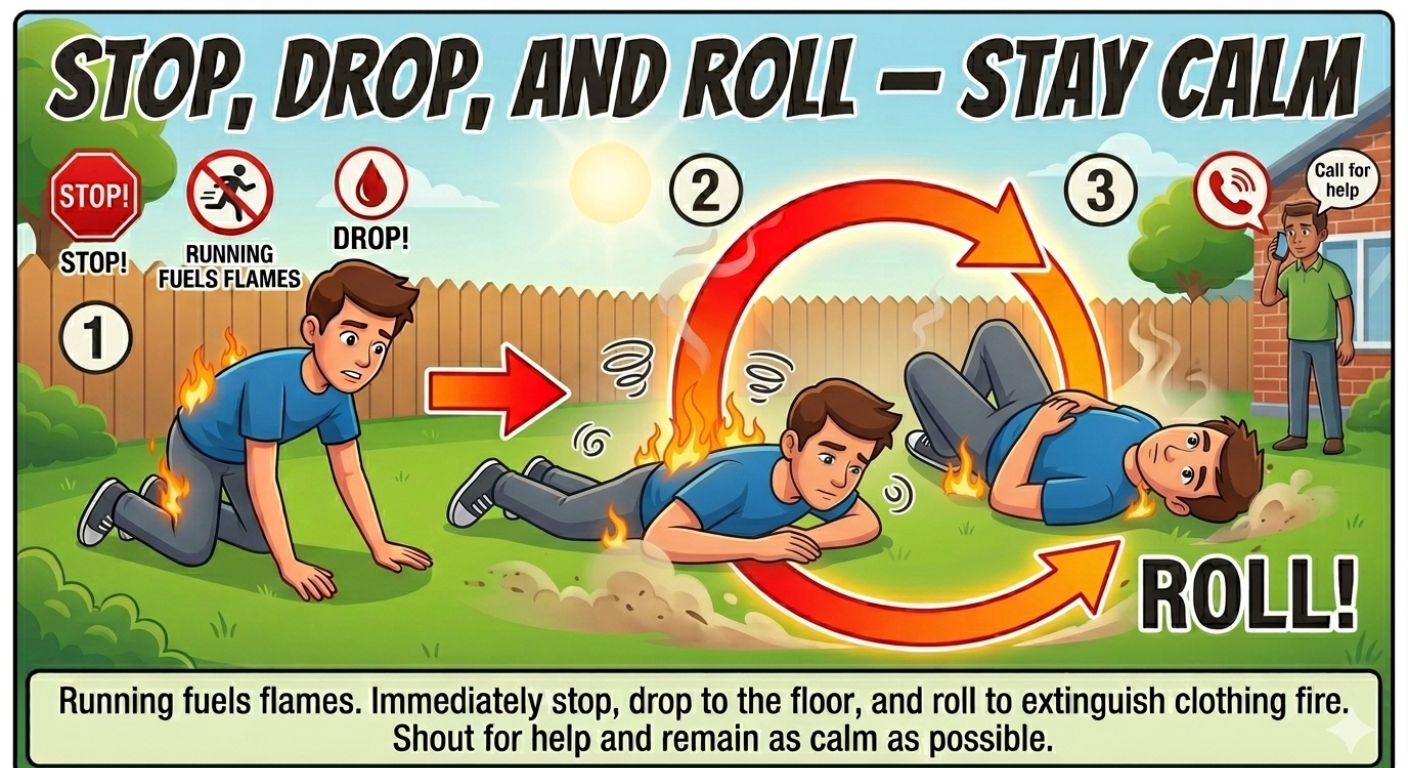
Safety Tip #5

STOP, DROP
AND ROLL

If your clothes catch fire, never run — it fans the flames. Stop immediately, drop to the ground, cover your face, and roll back and forth until the fire is completely out.

Teach children this technique early — it can save their life.

PROJECT LIGTAS SUNOG

Download App
About The Project

WHAT IS

PROJECT LIGTAS SUNOG?

Ligtas Sunog is a desktop game designed to educate players on fire safety through immersive, scenario gameplay. Set in realistic environments, players learn how to identify fire hazards, operate fire safety equipment, and make critical decisions under pressure. Built as an educational tool for schools, workplaces, and communities making fire safety awareness engaging, accessible, and unforgettable.

Desktop Game
Play on Windows Computers
Educational
Curriculum-aligned content
Fire Safety
Real-world scenarios

Play Now!

With his trusty hose and blazing spirit, he's here to douse the flames and save the day! Ready to join Cooper on his firefighting adventures?

FIREFIGHTER TOOLS

What Cooper uses to battle the blaze!

Class A · Class B Fires
FIRE EXTINGUISHER
FIRE EXTINGUISHER

FIRE EXTINGUISHER

Foam extinguishers are ideal for flammable liquid fires such as petrol, paint, and oils. The foam agent smothers the fire by cutting off its oxygen supply, preventing re-ignition.

How to Use
  1. 1 Pull the safety pin
  2. 2 Aim the nozzle at the base of the fire
  3. 3 Squeeze the handle to discharge
  4. 4 Sweep side to side until fire is out
Respiratory Protection
Self-Contained Breathing Apparatus

Self-Contained Breathing Apparatus

SCBA supplies clean air to firefighters in smoke-filled or oxygen-deficient environments. Essential personal protective equipment worn during all active firefighting operations.

How to Use
  1. 1 Inspect tank pressure before donning
  2. 2 Strap on the harness and tighten securely
  3. 3 Attach the facepiece and check seal
  4. 4 Open the air valve and confirm airflow
  5. 5 Doff only in clean air after exiting
Water Supply Infrastructure
FIRE HYDRANT
FIRE HYDRANT

FIRE HYDRANT

A fire hydrant is a connection point in the water supply system that allows firefighters to access large volumes of water quickly. Strategically placed throughout communities, hydrants are the backbone of urban firefighting operations.

How to Use
  1. 1 Locate the nearest hydrant to the fire
  2. 2 Remove the cap from the outlet
  3. 3 Connect the hose coupling securely
  4. 4 Use a hydrant wrench to open the valve
  5. 5 Regulate flow via the pump operator
Valve Operation Tool
HYDRANT WRENCH
HYDRANT WRENCH

HYDRANT WRENCH

The hydrant wrench is a specialized tool used to open and close fire hydrant valves. Its long handle provides the leverage needed to quickly operate stiff or rusted pentagonal nuts on hydrant caps and stems.

How to Use
  1. 1 Fit the wrench socket onto the pentagonal nut
  2. 2 Turn counter-clockwise to open the hydrant
  3. 3 Open slowly to avoid water hammer
  4. 4 Turn clockwise to shut off after operations
  5. 5 Replace and secure the hydrant cap
Primary Suppression Tool
FIRE HOSE
FIRE HOSE

FIRE HOSE

A fire hose delivers high-pressure water or foam directly onto a fire. Connected to a hydrant or pump truck, it is the primary tool for suppressing large structural and outdoor fires.

How to Use
  1. 1 Connect hose to hydrant or pump outlet
  2. 2 Charge the line and check for kinks
  3. 3 Grip the nozzle firmly with both hands
  4. 4 Open nozzle and aim at the base of the fire
  5. 5 Sweep side to side advancing toward the fire
Forcible Entry Tool
FIRE AXE
FIRE AXE

FIRE AXE

The fire axe is used for forcible entry, ventilation, and debris removal. Its sharp blade and heavy poll allow firefighters to breach doors, walls, and roofs to access trapped victims or ventilate smoke-filled structures.

How to Use
  1. 1 Grip handle firmly with both hands
  2. 2 Position feet shoulder-width apart
  3. 3 Swing in a controlled arc toward target
  4. 4 Strike at hinges or lock points to breach
  5. 5 Clear debris away from the opening
Prying & Rescue Tool
HALLIGAN CROWBAR
HALLIGAN CROWBAR

HALLIGAN CROWBAR

The Halligan bar is a multi-purpose prying tool used to force open doors, windows, and structural elements. Its fork, adze, and pick ends make it one of the most versatile tools on the fireground.

How to Use
  1. 1 Insert the fork end into the door gap
  2. 2 Drive it in with the axe if needed
  3. 3 Twist to pop the lock or hinge
  4. 4 Use the adze end to pry panels open
  5. 5 Advance with partner for coordinated entry